
© Tweeter Linder 2025 – All rights reserved. Photo by iStock.
Thought leadership is a niche profession where you can benefit from adopting approaches from other professions with similar challenges and operational models. This blog post contrasts thought leadership with a well-defined profession with many similarities.
What is new: Modern software development principles can be used as a baseline for running effective thought leadership programs.
Why it matters: Software and Thought Leadership development are creative, where structures are vital for predictable outcomes.
Six commonalities: Software and thought leadership development have at least six things in common
- Customer problem articulation
- Small team approach
- Holistic responsibility
- Tools that maximize productivity
- Agile development model
- Build in quality in all steps
- Phased release approach

🪩 Well-formulated customer problems: Modern software development goes beyond requirement specifications, prescribing a solution and starts by articulating the identified customer problem the software shall solve.
Excellent thought leadership supports customers in making decisions for complex challenges. A job that starts with understanding what problems to solve and why
- what is the nature of the decision you aim to support
- what insights and facts describe the problem best
⚠️ Product requirements and messages are both part of the solution. Great software and thought leadership start with crisp formulations of your customer problem.

🍕🍕 Two-pizza teams rule: Agile software development teams are limited in size to ~10 people. Where the size corresponds to how many people
- Team leader (1)
- Product manager (1)
- Developers (1-8)
The two-pizza team rule in a corporate thought leadership program is more diverse.
- Sponsor – Signing-off budget, resources, and final deliverables.
- Program manager – Managing the thought leadership program
- Main thought leader/lead author/speaker – Responsible for developing a differentiated point-of-view that resonates with the target audience
- Business consultant – leading the research
- Data scientist – making sense of all data and looking for actionable insights
- Content marketer – building assets around the research
- Editor – securing easy-to-understand and correct language
- Promotion specialist – Maximizing traction with target audiences.
⚠️ Avoid management by committee, where “everyone” gets to code and craft messages. The total number of contributors in a thought leadership program should fit within the two-pizza team rule.

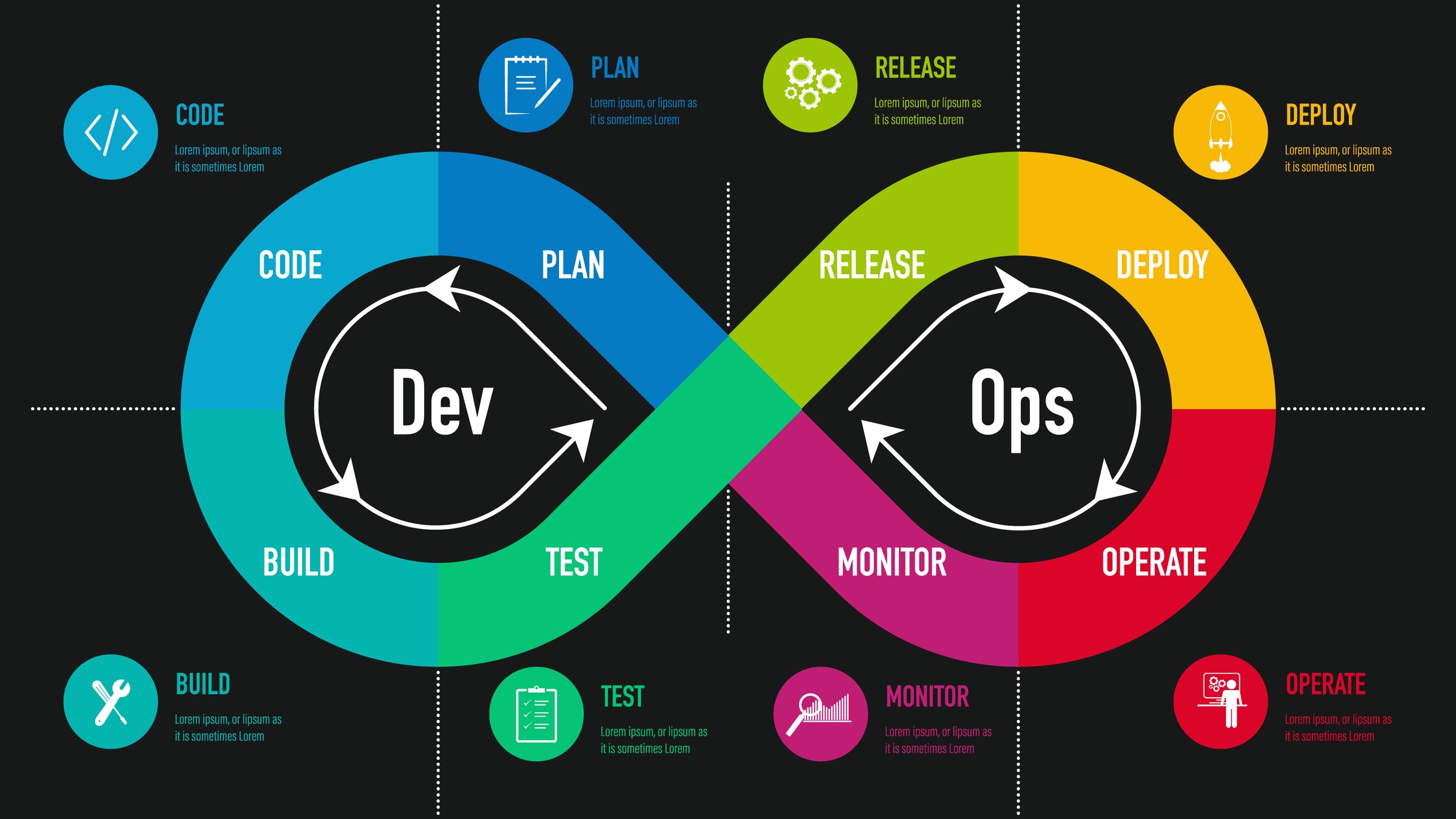
🔁 Holistic responsibility: A software development team is responsible for all stages in the development process. Big gains come from keeping requirements, coding, and testing tight together in one team. An operational model with holistic responsibility and two-week sprints is key to agility and quality.
A thought leadership team needs to own the whole process, from identifying/articulating customer problems and needs to promoting the final assets. The shorter the path from pinpointing needs to enable clients to take action, the better. The time you have at your disposal will only get shorter.
⚠️ Avoid splitting the job into two typical silos, one for thinking, messaging, and draft text creation and one to make it pretty and get it out.

🧰 Tools that maximize productivity: Software developers rely on a mix of own and third-party code accessed through APIs. Their own code focuses on differentiators and the external code for already developed capabilities.
Thought leaders can use a collection of “thinking templates” for different problem types. They support you in refining your point-of-views by starting from proven models. After using them, you speed up the process from an initial idea to a modular piece of your story.
⚠️ Avoid spreading yourself too thin by addressing already-solved problems and starting all development from a blank sheet of paper.

🔁 Agile development: Agile development is an integrated part of modern software development. It involves longer requirement lists broken down into priority lists, development execution structured in two-week sprints, and revisiting requirement priorities before each sprint.
The agile principles apply to thought leadership as well:
- Establish a backlog of question-insight pairs to address
- Development of thought leadership modules in two-week sprints
- Frequent validations with key stakeholders.
⚠️ Avoid the “Heathrow Express Model,” in which thought leadership development happens with a black-box approach between start and finish. Excellent thought leadership programs show progress bi-weekly on the path to perfection.

⛔️ Creating quality at the end is hard. Software quality comes from crisp requirements, correct and efficient code, and testing that confirms accurate function and resilience against errors. All three stages contribute to overall software quality.
For thought leadership, the quality comes from
- Generation of customer insights
- Development of draft assets
- Testing validity with lead customers
A good approach is to develop insights around proven “thinking templates” with a clear connection to the final assets. I prefer developing drafts in the target format from the start. It is hard to take free-flowing thinking and “prettify” it at the end, hoping the resulting quality will be excellent.
⚠️ Avoid an approach where the front end of your program creates “spaghetti thoughts” that the back end should turn into quality. This approach does not work for software code and increases lead time, reduces quality, and increases cost for thought leadership programs.
🐦 Phased release approach: Software developers release code in a phased approach. New code additions go through a “canary testing” phase, where a smaller group gets access first. Once confirmed that it works as intended and doesn’t contain bugs, it is ready to replace the previous version fully.
A modular thought leadership structure allows you to validate your thoughts with account teams and customers before full release. Validation during development and a full release to a limited audience reduce your risk exposure. This approach is especially valuable when you are pushing the envelope with new and innovative points of view.
⚠️ Avoid releasing thought leadership material broadly without first testing it on light-house customers. The feedback you get from a reference group early on is vital for securing output quality.
Bottom line: Thought leadership is a niche profession where you can benefit from stealing models and tools from other professions, like software development, that benefit from scale that is orders of magnitudes bigger.
Additional reading suggestions
- Agile thought leaders create, they don’t copy and paste [BLOGPOST] – by Anthony Mersino
- Lessons from Scrum: A more agile approach to thought leadership [ARTICLE] – by Financial Times Longitude
- What’s an agile thought leadership strategy? How do you get started [LINKEDINPOST] – by Yogesh Shah
- The nine principles of agile leadership [BLOGPOST] – by Agile Business Consortium
- Top 50 global thought leaders and influencers on agile 2024 [BLOGPOST] – by Thinkers 360


 Tweeter Linder